

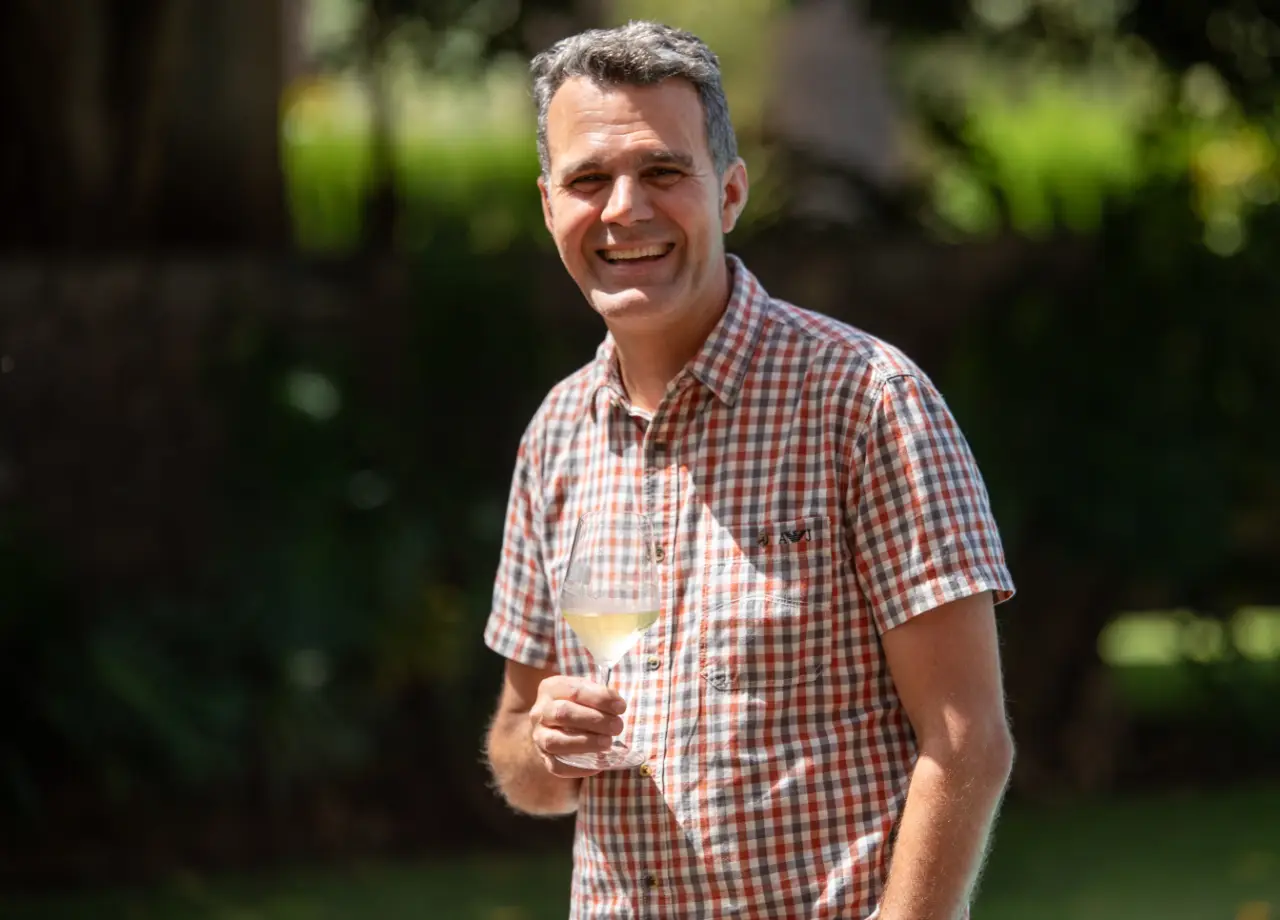
Harvest means making decisions before you know the outcome. When to pick, what balance to aim for, how to manage a fermentation: a whole year’s work comes together in just a few weeks. For Fran Álvarez, winemaker at Finca Escudero, this concentration of decisions makes it the most exciting part of his profession. His approach to it begins much earlier, in the vineyard.
An agricultural engineer specialising in viticulture and oenology, Francisco Álvarez grew up working in his father’s vineyards and cellar. For the family, making good wine and managing to sell it had an immediate impact on household finances. He went on to spend eleven years providing technical advice at SAT Viticultores de Tenerife and, since 2011, has worked as a winemaker at various wineries. His relationship with Juan Escudero began in 2008, with a specific aim: to improve the performance of his vineyards and the quality of his wines.
Santa Brígida helped cement that relationship. Its deep, fertile soils and the influence of the trade winds opened up possibilities that Álvarez continues to explore.
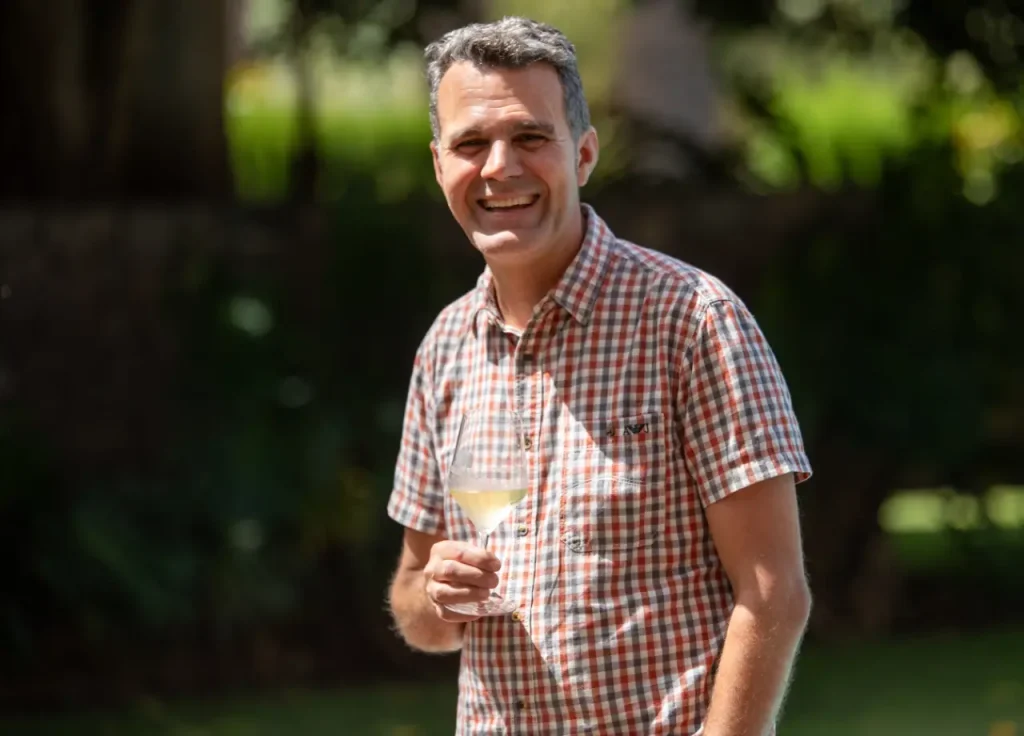
In this conversation, he explains how he interprets those conditions at Finca Escudero, which decisions guide his work, and why his trials with an ancestral-method sparkling wine make him look forward to future winemaking. He also discusses sustainability as an ongoing undertaking and the role of Canary Wine in helping people discover and understand Canary Islands wines, both at home and abroad.
How did your story with wine begin?
My relationship with wine goes back to childhood. My father had his own land, and vines were his favourite crop. Growing grapes and making wine were also his great passion.
At home, my father, my brothers and I did practically everything ourselves: we worked both in the vineyard and in the cellar. Winemaking was much more rudimentary then than it is today, but it was done with a great deal of passion and care.
And if the wine turned out well and we managed to sell it — selling local wine was not easy in those days — it made an important contribution to the family’s income.
What brought you to Bodegas Finca Escudero, and what made you stay?
At the time, back in 2008, I was working for a viticultural services company, SAT Viticultores de Tenerife, where my work mainly involved advising on vineyard management.
Juan came to us because he was not happy with how his vineyards were progressing or with the wines he was making. We met and began discussing different approaches to improving both the vineyard and the winemaking, and we have continued working together ever since.
I have stayed all these years partly because of Juan Escudero, with whom I have built a strong rapport and a good friendship over time, and partly because of my discovery of Santa Brígida.
Until then, I had mainly known Gran Canaria’s capital and the south of the island, so my impression was quite different from what I would find inland. Santa Brígida was a real surprise. Its soils and climate have some very interesting characteristics that, in certain respects, remind me of northern Tenerife or particular areas of La Palma: deep soils with good fertility, and a mild climate strongly influenced by the trade winds.
The influence of those winds and the associated cloud cover is particularly valuable in summer, as it helps moderate sunlight exposure and temperatures, allowing the grapes to ripen more gradually.
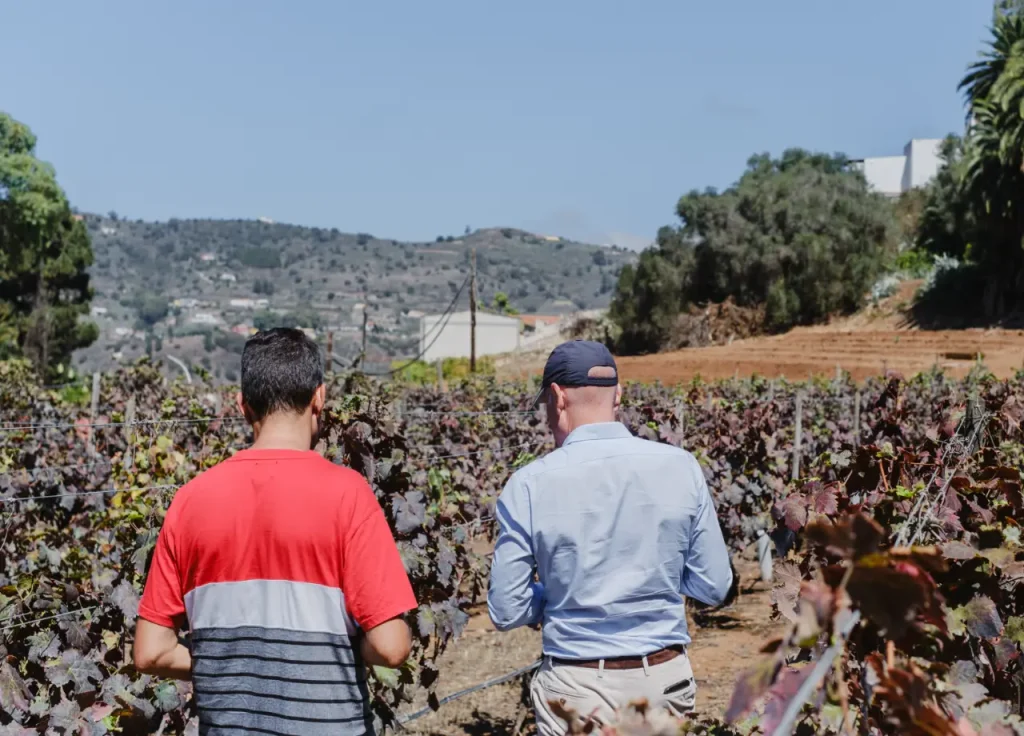
Fran Álvarez with Juan Escudero, owner of Finca Escudero
How does the volcanic, Atlantic landscape influence your understanding of wine?
It is precisely one of the things that makes us different.
We work with soils of volcanic origin that have very distinctive characteristics, and that uniqueness of place ultimately becomes part of our wines’ identity. In many tastings, we find a certain sense of salinity, freshness and tension, particularly noticeable in the white wines, which we clearly associate with the character of Canary Islands wines.
The Atlantic climate, especially on the islands’ northern slopes, also provides some very interesting conditions. The influence of the trade winds, cloud cover and more moderate temperatures allows for slower, more balanced ripening.
This helps preserve the grapes’ natural acidity and allows us to make fresh, aromatic wines with plenty of character.
Which part of the winemaking process do you enjoy most?
It is difficult to choose just one, but I would probably say harvest.
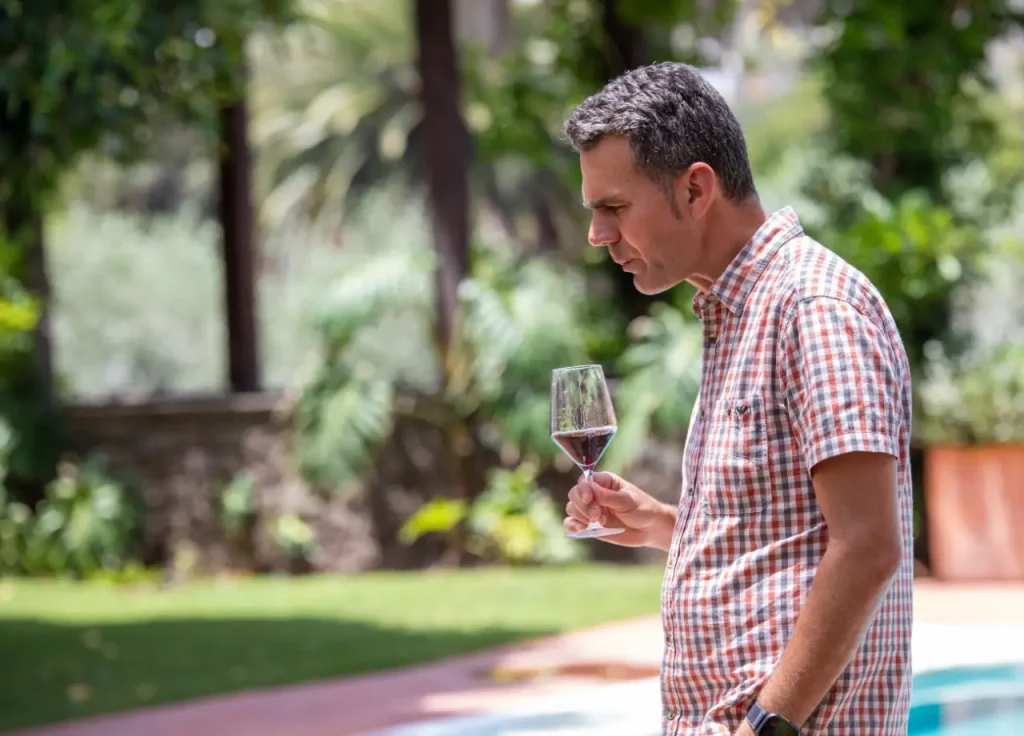
It is a very intense period because, in a short space of time, you make a lot of decisions that will shape the outcome of an entire year’s work. That creates a certain amount of pressure, but it also makes it one of the most exciting periods: from monitoring ripeness to determine the optimum picking date and find the best balance between potential alcohol, acidity and grape maturity, to checking fermentations daily, carrying out pump-overs and making all the other decisions that arise in the cellar.
During those weeks, you feel that everything is happening at once and that every decision counts.
How do you incorporate sustainability into your daily work?
At Finca Escudero, sustainability is an important part of how we work, and we try to keep it in mind throughout the process.
We start with organically grown grapes certified by the ICCA, and we try to carry that same philosophy through to our subsequent work in the cellar, seeking increasingly efficient and environmentally responsible processes.
Even so, we know there is still a great deal to do. Several projects are currently underway to help us improve further in this area, including the installation of photovoltaic panels and systems to treat winery wastewater and reuse it for irrigation.
We see sustainability as a process of continuous improvement rather than a one-off undertaking.
What values guide your work as a winemaker?
Fundamentally, my work as a winemaker is about trying to ensure that our wines can express the quality of the grape varieties we grow, the particular qualities of our soils and the characteristics of our climate.
We aim to intervene as much as necessary, while avoiding anything that might obscure the inherent character of the grapes and the place they come from.
For me, the most important work begins in the vineyard. If we can grow healthy, balanced, high-quality grapes, our work in the cellar is primarily about guiding them through the winemaking process, preventing faults and allowing all that earlier work to find its expression in the finished wine.
Are you currently working on any projects that particularly excite you?
For several years, we have been thinking about developing a sparkling wine made using the ancestral method, and we have been carrying out various trials.
The initial trials have been very encouraging, and we believe the local conditions and the characteristics of our grapes could be very well suited to this style of winemaking.
We are still learning and making adjustments, but the results so far suggest that we could produce a really interesting wine with plenty of character.
How do you see Canary Wine’s current role, both in international markets and in local consumption, and what do you consider most important for strengthening its presence in both?
I think Canary Wine’s strategy is very important for the sector as a whole.
First of all, it is essential that the millions of visitors who come to the Canary Islands each year know that we also produce wine here, and that our wines are of high quality and have characteristics that clearly distinguish us from other wine regions: our traditional grape varieties, volcanic soils, Atlantic climate and the enormous diversity between islands and local areas.
In that respect, Canary Wine is a very valuable tool for communicating a shared identity and helping consumers recognise and appreciate wines made in the Canary Islands.
It is also gaining an increasingly strong presence in international markets and can play an important role in helping wineries raise awareness of their wines and export them.
In our particular case, that is not yet a priority, because our production is limited and most of our wine is currently sold on the estate itself, particularly through wine tourism.
I think one of the main challenges ahead is precisely to help both visitors and local consumers understand that Canary Islands wine is more than a product: it is also an expression of our landscape, agriculture and culture.
Finally, if you had to sum up in one sentence what wine has given you as a person, what would it be?
Working in wine teaches you to approach life with optimism and to keep finding the energy to meet each day’s challenges, because every harvest begins a new story.